



























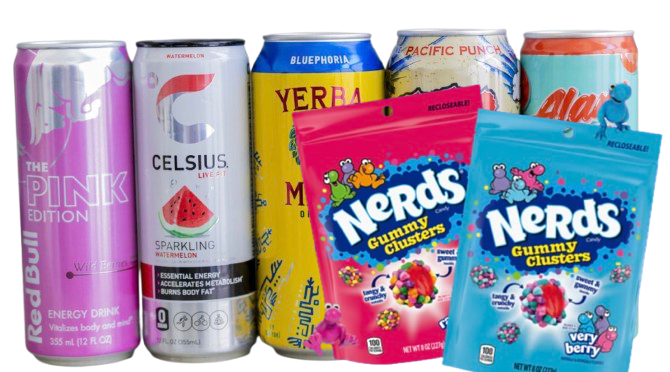
Just over 50% of athletes from a sample of students at Upper Arlington High School claim to drink energy drinks. While the majority of athletes at UAHS rely on energy drinks for a quick boost before practices or competitions, professional athletes have mirrored this trend, turning to energy boosting snacks with sugar, including candy.
Despite the fact that tons of pros use energy drinks, many are swapping expensive energy gels for gummy clusters or sour candies. For elite athletes, carbohydrates are necessary for optimizing energy and preventing fatigue. Although many rely heavily on energy drinks, many UAHS students believe these drinks carry long-term health risks, meaning they recognize the harmful effects of caffeine but may not yet realize that carbohydrates, including candy, offer safer and cheaper performance benefits similar to what pros now embrace.
Concerns about caffeine risks highlight why nutrition experts place emphasis on safer and simpler sources of energy. Tony Millikan, a master of dietetics student at The Ohio State explained that caffeine usage in sports has its benefits and risks.
“Some benefits include possible temporary improvements in performance, while risks include an abnormal heart rate, anxiety and headaches. The risk to benefit analysis reflects why elite athletes have turned toward sugar based energy instead. It allows performance to be fueled without the cardiovascular strain affiliated with constant caffeine intake,” Millikan said.
Millikan places emphasis on electrolytes and hydration. He explained that good choices before workouts include sports drinks, fruits and carbohydrates. His recommendations align with why candy can be so effective for many athletes. Tons of candies contain the same sugars that fuel athletes’ muscles efficiently. While sports drinks and fruits remain ideal sources of energy and nutrition, candies also function as fast carbs that are easy to process and provide an immediate energy boost.
“Snacking is important [for athletes]. It keeps your body fueled between short periods of rest,” Millikan said.
“Sugar helps to fuel muscles throughout exercise and performance. The best time to eat candy is before or during workout,” Millikan said.
Still, many remain skeptical concerning candy’s role in sports nutrition despite how commonly it is already starting to be used.
Some may argue that candy is a detriment to athletic performance. 40% of student athletes claim to eat candy before their games or competitions. Sugar can be easily digested and used for fuel to provide energy to the muscles. It also plays a role in recovery by replenishing energy stores and helping rebuild muscle. Despite candy’s negative reputation as junk food, nearly half of UAHS athletes from a survey of nearly 100 people already use it as pre-game fuel. Professional athletes add more credibility to this trend by incorporating candy into their own diets.
Many professional athletes, including DK Metcalf, Katie Leducky, Sheri Piers and Lamar Odom, have been reported to eat candy or have candy in their diets. Although it can be argued that gels are made specifically for optimal sports performance so they might offer a few more benefits, their nutritional values are not so different from the Nerds Gummy Clusters.
Despite the popularity of sports branded fuels among athletes, many of these products reflect the simple carbohydrate profile found in candy. About 80% of student athletes at UAHS claim to eat snacks made specifically for sports, such as energy chews, sports bars, Gatorade and more.
While many gravitate toward sports-branded snacks which are designed to deliver carbs, electrolytes and hydration, many of these expensive products are rebranded and reformed versions of what candy already offers. Professionals beginning to choose candy over these sports branded snacks highlight an awareness that performance nutrition does not have to be expensive or overengineered.