

The teenage brain is under construction. The prefrontal cortex is developing, unused connections are removed and neural pathways are strengthened until finally, at the age of 25, the project is finished and the brain is fully developed. From maturity and impulsivity to irritable emotions, teenagers have it all.
According to the National Library of Medicine, during the first two and a half decades of life, the human brain is a construction site, and learning processes direct its shaping through experience-dependent neuroplasticity.
Teenagers are stuck in an awkward stage between child and adult, being mistaken for both ends of the spectrum. Society generally considers people from 13-19 years old to lack responsibility, fall into recklessness and suffer from laziness.
The reality is that teenagers are still “building” their adult selves. They are still learning how to be a part of the adult and professional world. Across high schools, stadiums and social battlefields, teenagers develop critical thinking, emotional maturity and other crucial life skills and characteristics.
Impulsivity: The Wrecking Ball
Teenagers are frequently labeled as impulsive and immature, but throughout the stages of life–in order to learn–teenagers must make decisions by themselves.
At the age of 13, middle schoolers are categorized alongside high school graduated 19- year-old adults. Ethically, comparing teenagers who are experiencing two totally different chapters of their life is often questionable, especially since a common concern about teens is the way they act first and reflect on their decisions later. Ninth and 10th grade Upper Arlington High School Intervention Specialist, Erica Meck, has observed students’ behaviors closely.
“I see students who struggle with an impulsive choice they are currently making, and they know it, but they can’t stop themselves, or they’ve made it in the past and they deal with the guilt and shame of the decision that they know was wrong,” Meck said.
When students feel shameful for their actions they often start acting a certain way and not always in a positive manner.
“Because of that guilt and shame, [students] either act inappropriately, they’re either disrespectful, or they just stop turning in assignments, or they start isolating themselves from the teacher or from support,” Meck said.
After transitioning from closely working with juniors to now freshman and sophomores, Meck explained she sees a huge amount of growth in the ability to reflect as well as understanding mistakes.
“As you get older you learn [about] permanence. Things come and go [and] we all make mistakes,” Meck said. “You’re going to make decisions because you’re testing boundaries and you’re figuring things out through trial and error.”
When navigating challenges, a person’s ‘village’ can be a crucial system of support. A village refers to human connections whether that’s family, friends, significant others or any type of personal connection.
“[The village] is working together to remind that person that they are loved, [and] cared for. No matter how impulsive or immature you are, we’re sticking with you. That idea is crucial,” Meck said.
Sometimes teenagers may lose someone from their village and must learn to grow from it.
“They have to have that mature brain to see a situation like that as a stepping stone instead of it being the end of the world,” Meck said. “If they have the right support systems around them, then it is a really good learning experience.”
A person who loses a part of their village may experience challenges dealing with their emotions, something the amygdala is in charge of.
The amygdala, a highly active structure in the limbic system, is primarily responsible for processing emotions and it plays a key role in regulating emotional responses, detecting threats, forming emotional memories and controlling defense reactions. A researcher at Tufts School of Medicine explained that teens are more likely to react impulsively because subcortical structures such as the amygdala have matured while the prefrontal cortex is still developing. Along with the matured amygdala and the undermatured prefrontal cortex, hormones increase impulsivity by causing a temporary imbalance between the three. Hormones during puberty influence the amygdala, making it more reactive and thus making teenagers feel emotions more deeply. 10th and 11th grade UAHS Intervention Specialist, Jack Blaisdell, recognizes changes teenagers experience.
“Teenagers’ bodies are developing not only mentally but physically, and there’s a lot of different things going on in their bodies which causes different emotional reactions,” Blaisdell said.
For students, those changes often show up in everyday moments at school. Stress can make even small decisions feel overwhelming. Freshman Ava Beach discussed how stress affects her.
“When I’m more stressed, I can’t make decisions at all,” Beach said.
While stress can make things harder, it is only one side of how teenage brains work. Despite still developing, teenagers are capable of creative and thoughtful thinking. Teenagers can even shock adults with their imaginative viewpoints.
“The things [teenagers] think of I would never think of, and they’re much more positive than adults,” Meck said.
Teenagers in 2026 understand technology like never before. This understanding allows them to have access to countless people and ideas.
“Because of all this information overload, it’s made [teenagers] so much more empathetic in a beautiful way,” Meck said.
While stress and strong emotions can make daily life more challenging, those same developing brains also allow for creativity, empathy and fresh perspectives. As teenagers continue to grow and mature, their ability to understand the world—and each other—has the potential to make a real impact.
Learning: The Blueprint
Brain development is not identical from person to person and unique brain wiring from genetics, neuroplasticity (the brain’s ability to change) and the developmental stage creates various pathways for processing information. There are many different ways students learn.
“Some students are what’s called a kinesthetic learner, meaning they like hands-on activities. They want to be able to touch, feel and manipulate the thing they are learning about,” Blaisdell said.
Along with a kinesthetic learner there are also auditory learners who learn by hearing and listening, whether that be through spoken words, discussions or lectures, and visual learners who learn best by seeing information, preferring visuals like diagrams, charts or videos. However, a person is not limited to just one of these titles.
“But more often than not people are a combination of all those things,” Blaisdell said.
The teenage brain develops not just physically but also mentally, which can lead to a range of challenges.
To some teens, learning can feel like a chore, just something that they are required to do rather than enjoy. As a result, students can struggle academically even though they are fully capable of performing well. Everyone has something that they are passionate about whether that be a topic, class or hobby, and for some nothing at school falls under their category of interest, leading to a disregard for academics.
“It’s tough to care and want to succeed in a topic if you’re not curious about the topic,” Blaisdell said.
Without genuine interest or curiosity students are less likely to engage in the material needed to succeed. But the structure of the school day also serves as a barrier to teens’ ability to focus and naturally learn.
“I think it’s challenging to expect teenagers to sit for 45 minutes at a time for seven or eight classes in a room and not go stir crazy, not have behavioral issues or not have the ability to stay focused. It just kind of goes against our human anatomy to just sit and stare at a screen for eight hours,” Blaisdell said.
Challenges with focus and engagement are closely connected to the development of cognitive skills that help students navigate attention, behavior and responsibilities.
Executive function skills are a set of cognitive abilities for managing daily life and achieving goals. According to Brown University Health, there are eight executive functioning skills: initiation, inhibition, flexibility, emotional control, working memory, organization, planning and self-monitoring. These skills are still developing in teenagers and will not fully develop until their mid-20s.
Helping students develop these skills is crucial because they start to understand the importance of critical thinking, decision making and adaptability. Teenagers often react and adapt to change differently compared to adults. A combination of more advanced brain development and greater life experience allows adults to cope and regulate emotions easier. Whether it is going to a new school, taking a harder class or even sitting with a new person, teenagers tend to not want things to change and have a hard time adjusting when they do.
“When teachers change seats it messes me up because it’s hard to focus and talk to new people,” Beach said.
The underdeveloped executive function in teenagers makes it harder to plan and manage environmental or emotional changes. Teenagers often find comfort in having a clear, consistent routine because it is not as risky.
“I see kids who like predictability because it feels safer,” Meck said.
Safer does not always mean easier. Sometimes students are not able to organize and process new information quickly.
In order for students to organize the information they learn, it is important they have some form of organization for their goals and activities. While some students may need help with organization others are able to manage on their own. Sophomore Olivia Marks is organized when it comes to school and extracurriculars.
“I have a bunch of calendars and [I] make sure I know exactly what I’m doing,” Marks said.
Students who struggle with executive function may also struggle with learning and social connections making them prone to procrastination and disorganization. It is essential for students to regulate emotions when struggling. Talking to a friend, family member, trusted adult or even a stranger can be beneficial.
Overall, executive function plays a major role in how teenagers handle school, stress and change. Because these skills are still developing, many students need structure, support and patience as they learn to manage their responsibilities and emotions. With the right tools and guidance, teenagers can gradually build these skills and gain confidence in navigating both academics and everyday life.
In the popular children’s book, “Oh the Places You’ll Go,” Dr. Seuss once said the more you read, the more things you will know. The more that you learn, the more places you’ll go.
Although everyone may learn differently, knowledge—however it is gained— varies perspectives and opens the door for more opportunities.
Artificial Intelligence: The Modern Tool Kit
In schools across the world, including UAHS, students have begun using artificial intelligence chatbots such as ChatGPT and Google Gemini. The real question is, are these technological milestones for better or for worse when considering the younger generations’ brain development and critical thinking skills?
At this point, people are still debating the pros and cons. Whether it is specifically in school systems or for everyday life, everyone has different opinions on AI.
“We have AI synthesizing a bunch of stuff it found and putting out answers, and you’re like, ‘I don’t even know if that’s right or not,’” UAHS computer science teacher, Diane Kahle said.
AI is new to society, therefore schools are still learning how to implement it into their courses and appropriately prepare students for a technological-focused life after high school.
“We have to teach this generation how to use AI at the same time we’re learning how to use it because three years ago ChatGPT didn’t exist yet,” Kahle said.
Many classrooms across the nation have raised concerns about abusing AI. Whether it is students having the chatbots write their essays or completing their math homework, many educators are working to teach students how to appropriately use it.
“I think that the whole key with any subject is that you’ve got to get the kids to think and plan and have some ideas. Then you can get help for a few reasons,” Kahle said.
Kahle uses an in-class assignment to demonstrate how to correctly use AI.
“In one of my classes last semester, we wanted to do some data analysis. We did not have time to go through how to learn everything so, first, we got through the thinking of what we wanted. Then, we asked the search engine for some help. The whole idea was that we didn’t let it just do the whole thing for us,” Kahle said.
AI can be threatening for teenagers because of their impulsivity and immaturity.
“I don’t think I could have a class right now that was totally AI open because I don’t think everybody has the self-discipline to know when to use it and not to use it. So I really try to give them guidance,” Kahle said.
School is not just about getting a strong GPA; it is about developing critical thinking skills, creativity and gaining knowledge. ChatGPT and other chatbots may be putting meaningful learning at risk.
“What I do think AI is hurting is critical thinking skills. Because of how easy it is to just type the exact phrase in and without even thinking, just be like, well, the AI said this,” Long said.
While in many learning and developmental scenarios, the easy access to AI is negative, there are some times when it can be considered beneficial.
“Creativity. I think it helps immensely with creativity. ‘How can I write this sentence better? How can you make me a picture to go with this story?’ Those things are great,” Kahle said.
AI is embedded everywhere. Every part of technological life is slowly taking in artificial intelligence. It has gotten to a point where people using AI may not even realise they are truly using it.
“I think deep reasoning and problem solving is the thing that kids right now are struggling with. You want to know what the answer is, you look it up. There is never something that you have to struggle through to understand,” Kahle said.
Even though AI can be an intimidating tool, it is integrated into the world.
“I think you should use it. I think it’s just how your generation learns to balance that with your own critical reasoning, because the AI is never going to weigh your value system into its answers,” Long said.
In order to prepare for the technology-driven future, children need to learn how to use AI to their advantage.
“I think there’s a purpose for AI. AI is in our world. We can’t take it out of our world, so we have to learn how to use it. I cannot say to my students ‘Do not ever use AI’ because I know it is everywhere,” Kahle said.
As people head into the future, whether there are robots for everything or not, it is important people stay unique. As a society, the world must teach developing teenagers the importance of staying true to oneself, having unique opinions and the value of human connection.
“That’s the beauty of human nature. If we were all the same, life would be boring. It’s a beautiful thing that people have different strengths and different weaknesses,” Kahle said.
Relationships: The Cement
The transition from middle school to high school allows for countless opportunities. With UAHS’ widespread number of students, high schoolers will develop relationships amongst their peers. As these relationships begin to form, they may present communication challenges which can be difficult for teenagers in comparison to adults. LF Counseling therapist Lara Falberg, who primarily works with couples, shared common differences between teenage and adult relationships.
“There is a different communication level that happens between teenagers and adults, and so different expectations also exist,” Falberg said. “I hear young women [say] that they’re increasingly finding guys their age difficult to communicate with, and so there seems to be this trend of people not really dating, which is not happening in the adult [world].”
In the situation that teenagers start romantic relationships, Falberg explained what truly is happening.
“There is this giant dopamine hit that happens in our brain when we’re attracted to somebody,” Falberg said.
According to the Cleveland Clinic, dopamine is known as the ‘feel-good’ hormone. It gives you a sense of pleasure. But, Falberg explained dopamine can also be manipulative. When people are attracted to someone there is a spike of dopamine in the brain which can cause obsession over validation, intense emotions and ultimately lead to a craving for that person. Dopamine can also push the brain to justify or excuse that person’s actions, reinforcing a toxic cycle of behavior.
“When you lower and lower your expectations [for someone], you [put] up with things you don’t really want to put up with,” Falberg said.
The more people lower their expectations and tolerate bad behavior in relationships, the more they start to lose their sense of self.
“When you blame yourself for somebody else’s behavior, it automatically feeds this information to your brain that there is something wrong with you, you did something wrong, you brought this on yourself,” Falberg said.
Toxicity in a relationship is known to influence other friendships and future relationships. Sometimes it can be difficult for people to trust other partners due to the impact of past experiences.
“What happens is that we take the baggage from our bad relationship, and we typically bring it into a relationship that could potentially be good, so what winds up happening is there’s self sabotage,” Falberg said.
In the outcome of a great relationship, Falberg also emphasized independence and personal passions are just as important. Without prioritizing self interests in a relationship, it’s possible to develop similar interests and hobbies alongside a partner. While having similar interests is perfectly fine, it can be easy to fall into a pattern of relationship convergence, the process in which partners in a close relationship become more similar over time in emotions, behaviors and personality.
“It is really valuable and important to have different interests, because then you bring different things to the table,” Falberg said.
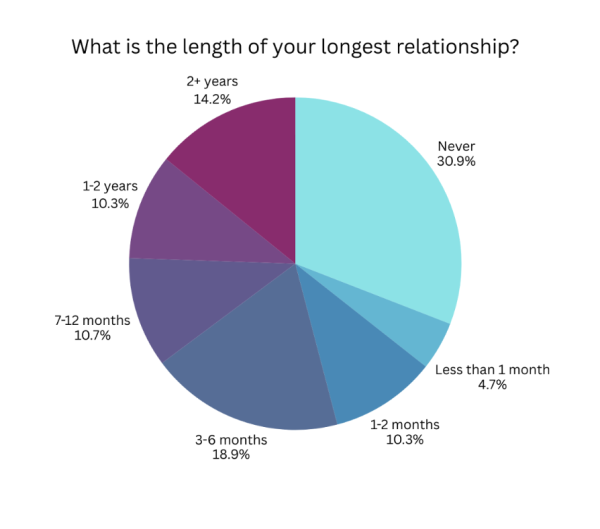 Along with a strong sense of personal identity, recognizing boundaries and practicing self respect are stepping stones to building a healthy relationship. As the brain is developing, repeated behaviors become strongly reinforced; current behaviors are often indicative of future actions. Ultimately, the habits that are built and the expectations that are made when one is a teenager are the things that are carried into relationships in adulthood. Falberg shared that one’s level of self respect plays a significant role determining the behaviors that are accepted in a relationship.
“I would say it really depends on self respect and self esteem, and if you can prioritize your self respect [as] a teenager [or] an adult, you decide how you will and will not let people treat you,” Falberg said.
In a relationship where validation is consistently dependent on another person, the first step to being treated appropriately is not allowing self worth to be determined by the actions of another individual.
“Ultimately, nobody respects someone who doesn’t respect themself,” Falberg said.
Relying on external validation like praises from others will eventually train the brain to look outside for approval creating dependence, while focusing on character, values and integrity builds the pre-frontal cortex and internal self-worth.
Self love and self respect also play a vital role in relationship growth. Falberg emphasized that people who have experienced mistreatment in past relationships cannot truly progress in future ones until they develop enough self respect to recognize that the way they were treated was unacceptable.
“It depends on, are you open to realizing that you never should have been treated that way in the first place, and will you make changes moving forward?” Falberg said.
Teenage relationships are not always going to be perfect, mainly because the people in them are still developing emotionally and neurologically. Feelings are more intense, impulsive decisions are made and attention and validation are craved. But even in such a fragile state, there is an understanding that people treat each other the way they would like to be treated.
“We are now going to have an agreement with ourselves that [if] you don’t treat us with respect, we have no time for you. What would happen to your brain, what would happen to how you feel about yourself?” Falberg said.
Every decision made, each lesson learned and all relationships formed contribute to the construction of each developing mind, helping complete the final project: a matured brain.