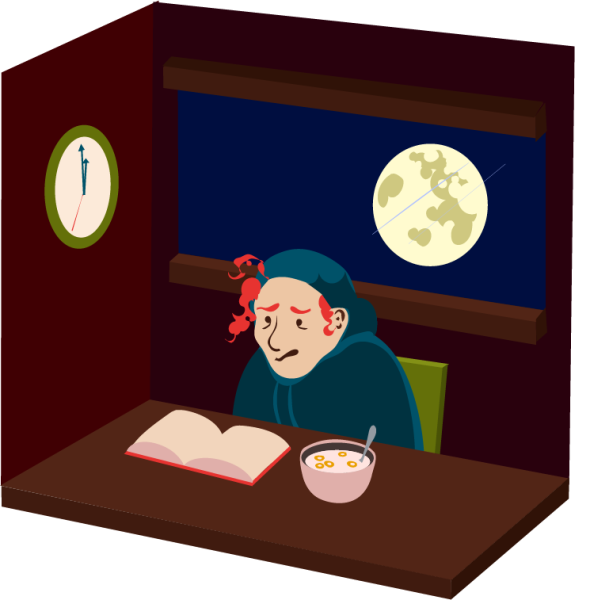


















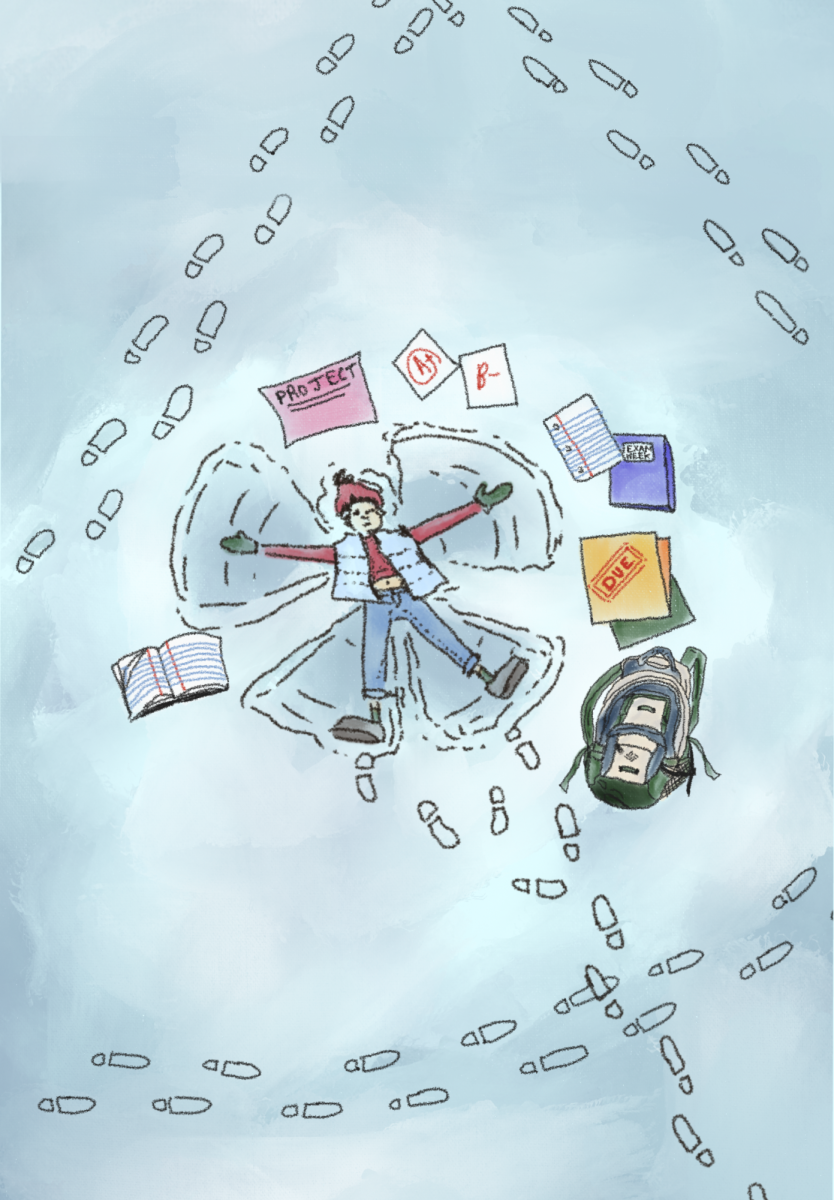





It’s 8:30 on a Monday night in the middle of December. Dinner sits on the kitchen counter beside a pile of unfinished homework. Snow drifts past the window, hinting at the long, cold and dim days ahead. The long list of the night’s tasks remain: showering, packing, and preparing for the next day.
Many students feel this way during winter, when they are surrounded by what seems like an endless cycle of school, extracurriculars and homework. It can be draining, and the absolute lack of sunlight and time outdoors can increase stress and the risk of burnout.
With daylight savings just having passed on Nov. 2nd, sunrise and sunset in Columbus, Ohio will be around 7:05 a.m. and 5:00 p.m., respectively. This means that many students, especially those who participate in sports or extracurricular activities, will barely see the light of day throughout the winter.
The shortest day of this year, the winter solstice, will be on Sunday, Dec. 21. Daylight will only appear for seven hours. Long days at school with little to no sunlight are inevitable, and students can long for summer days when the sun didn’t set until nine o’clock.
This lack of sunlight, especially throughout school days in the winter, does not just affect mood. It can contribute to mental health issues, some of which are more prevalent in younger generations.
In recent years, mental health has become a polarizing subject as Generation Z (Gen Z), people born between the years of 1997 and 2012, have shown a rapid increase in mental health challenges such as anxiety or depression. The American Psychological Association stated that Gen Z is more likely than Millennials or Generation Xers to face mental problems, as 27% report their mental health as fair or poor.
Depression and other mental illnesses have various causes, such as genetics or neurochemical imbalances, but a change in seasons can also cause them.
Seasonal affective disorder (SAD), or more commonly referred to as seasonal depression, is a type of depression that occurs regularly during certain seasons of the year. Trends in SAD have been shown to affect women more than men, and are more frequent in younger adults rather than older adults. These statistics are due to a combination of hormonal, biological and social factors
In most cases, depressive symptoms start in the fall and continue into the winter months, resolving in the spring. While it is uncommon, SAD can also take place the other way around, with symptoms beginning in the spring or summer. Upper Arlington High School Mental Health Clinician, Besty Youse, explained some symptoms of SAD.
“The depressive symptoms are about the same as they are with clinical depression, lack of desire to do things, not feeling like you enjoy things you usually enjoy and lower energy,” Youse said.
During the cold, dark winter months, it may be easy to write off seasonal depression as “winter blues” or just a slump, but Youse clarified that paying attention to symptoms and knowing when to ask for help is essential.
“Generally if these feelings last longer than two weeks, it’s a great idea to talk to a professional because you can feel down for a couple of weeks and it can just be a low mood, if it goes on longer than a few weeks and you can’t really think of a reason why, it’s really good to talk to someone,” Youse said.
Seasonal depression, like other forms of depression, has several treatment options, including therapy and medications. Youse explained that treatment is individualized based on the person and regardless of the form, getting treatment is the most crucial aspect for people struggling with depression.
“If your depression is getting in the way of your daily living, you really don’t need to be living like that… all the research suggests that therapy and medication combined give you the best treatment to treat all kinds of depression,” Youse said.
There are also behavioral techniques that help manage seasonal depression, a beneficial technique being Dialectical Behavior Therapy (DBT), incorporating opposite action. Opposite action is a technique that requires intentionally doing the opposite of what an emotion urges or motivates. DBT helps people learn to balance acceptance and change to manage intense emotions.
“When you’re depressed, your mind is telling you you don’t want to be with friends, or you’re just going to ignore that homework, and you’re not gonna go to school. You’re going to avoid things a lot of the time when you’re depressed and doing the opposite action would be to face it. It sounds really simple but it’s not simple at all,” Youse said.
Youse expressed that dealing with depression is much more of a struggle than many realize, but supporting friends and family who are struggling makes these hard times a little bit easier.
“It’s very hard not to be frustrated with someone when they’re depressed because it’s really hard to understand why they’re making their life seemingly more difficult, but just try to remember they can’t help it,” Youse said.
Throughout the winter, students push their limits both academically and through extracurricular activities including sports. Sports Psychologist Sean Ring, who is also a teacher and baseball coach for Westerville City Schools, offered insight into what it truly means for students to spend so much time indoors throughout the winter.
“We get less sunlight and spend less time outside and our bodies naturally need some of that to maintain homeostasis. The less of that vitamin D and outdoor exposure can lead [students] to feel a little bit more tired and sluggish. With the daylight hours being condensed, it’s tough to regulate the body that way,” Ring said.
Everybody needs sunlight to boost serotonin levels and produce vitamin D, which is essential to bodily health, strength and stress reduction. Students, however, need more sunlight than the average person because vitamin D is critical to growth and development, and their requirements can be higher during childhood and teenage years.
“[Athletes and those who are involved in extracurriculars] are probably going to be more tired and exhaust themselves quite a bit. On top of that, [the winter] can feel more daunting,” Ring said.
Especially through sports, students get worn out mentally and physically. It can cause increased amounts of stress and pressure. Ring explains how many teens can feel conflicted between wanting to rest and feeling guilty for doing so. The lack of sunlight can make it even more difficult to find a spark of motivation that comes naturally in the summer, which can lead to fatigue and frustration.
“Some of the best things that teachers and coaches can do is educate students on how to take care of themselves and their minds and what it may look or feel like to be overly exhausted… just getting resources and education in the hands of these students can be a great first step,” Ring said.
Ring expanded on ways to stay balanced throughout the winter and how to avoid feeling too stressed or overwhelmed.
“Maintaining the same sleep patterns is pretty important. For teenagers we’re looking for 9 to 11 hours of sleep. All of these extended periods of darkness can lead to students staying up too late or even oversleeping. Oversleeping can have the same exhausting effects because you’re not letting your body be active,” he said.
Upper Arlington High School’s senior and Marshall University commit, Elizabeth Hunt, provided insight on her experience with winter stress from academics and basketball.
“I have a lot more energy in the summer than in the winter. It’s nice and sunny out and everybody gets more sleep. [It’s also] less stressful,” Hunt said.
Even though winter can bring lower energy and more stress, many students find comfort in the people around them who understand what they are going through.
“I am really lucky to have a lot of systems of support around me like my coaches, my parents and especially my teammates. I know they’re all going through the same thing as me and we all have a lot going on so that helps,” Hunt said.
Ultimately, there are many resources to utilize when feeling overwhelmed or stressed this winter. Protectors from depression and burnout including time with family and friends, therapy and time management are beneficial options. Hunt shared how she stays positive during stressful times.
“One of the things that keeps me motivated is getting to spend time with my friends and the people I love,” Hunt said.
Support from family, teammates and mentors becomes extremely significant throughout the winter, giving motivation and a sense of belonging when the season feels most isolating. In the end, community and proper self care serve as the strongest protectors against the winter’s challenges, reminding students that they are not alone in what they face.
It’s 8:30 on a Monday night in the middle of December. Dinner sits on the kitchen counter beside a pile of unfinished homework. Snow drifts past the window, hinting at the long, cold and dim days ahead. The long list of the night’s tasks remain: showering, packing, and preparing for the next day.
Many students feel this way during winter, when they are surrounded by what seems like an endless cycle of school, extracurriculars and homework. It can be draining, and the absolute lack of sunlight and time outdoors can increase stress and the risk of burnout.
With daylight savings just having passed on Nov. 2nd, sunrise and sunset in Columbus, Ohio will be around 7:05 a.m. and 5:00 p.m., respectively. This means that many students, especially those who participate in sports or extracurricular activities, will barely see the light of day throughout the winter.
The shortest day of this year, the winter solstice, will be on Sunday, Dec. 21. Daylight will only appear for seven hours. Long days at school with little to no sunlight are inevitable, and students can long for summer days when the sun didn’t set until nine o’clock.
This lack of sunlight, especially throughout school days in the winter, does not just affect mood. It can contribute to mental health issues, some of which are more prevalent in younger generations.
In recent years, mental health has become a polarizing subject as Generation Z (Gen Z), people born between the years of 1997 and 2012, have shown a rapid increase in mental health challenges such as anxiety or depression. The American Psychological Association stated that Gen Z is more likely than Millennials or Generation Xers to face mental problems, as 27% report their mental health as fair or poor.
Depression and other mental illnesses have various causes, such as genetics or neurochemical imbalances, but a change in seasons can also cause them.
Seasonal affective disorder (SAD), or more commonly referred to as seasonal depression, is a type of depression that occurs regularly during certain seasons of the year. Trends in SAD have been shown to affect women more than men, and are more frequent in younger adults rather than older adults. These statistics are due to a combination of hormonal, biological and social factors
In most cases, depressive symptoms start in the fall and continue into the winter months, resolving in the spring. While it is uncommon, SAD can also take place the other way around, with symptoms beginning in the spring or summer. Upper Arlington High School Mental Health Clinician, Besty Youse, explained some symptoms of SAD.
“The depressive symptoms are about the same as they are with clinical depression, lack of desire to do things, not feeling like you enjoy things you usually enjoy and lower energy,” Youse said.
During the cold, dark winter months, it may be easy to write off seasonal depression as “winter blues” or just a slump, but Youse clarified that paying attention to symptoms and knowing when to ask for help is essential.
“Generally if these feelings last longer than two weeks, it’s a great idea to talk to a professional because you can feel down for a couple of weeks and it can just be a low mood, if it goes on longer than a few weeks and you can’t really think of a reason why, it’s really good to talk to someone,” Youse said.
Seasonal depression, like other forms of depression, has several treatment options, including therapy and medications. Youse explained that treatment is individualized based on the person and regardless of the form, getting treatment is the most crucial aspect for people struggling with depression.
“If your depression is getting in the way of your daily living, you really don’t need to be living like that… all the research suggests that therapy and medication combined give you the best treatment to treat all kinds of depression,” Youse said.
There are also behavioral techniques that help manage seasonal depression, a beneficial technique being Dialectical Behavior Therapy (DBT), incorporating opposite action. Opposite action is a technique that requires intentionally doing the opposite of what an emotion urges or motivates. DBT helps people learn to balance acceptance and change to manage intense emotions.
“When you’re depressed, your mind is telling you you don’t want to be with friends, or you’re just going to ignore that homework, and you’re not gonna go to school. You’re going to avoid things a lot of the time when you’re depressed and doing the opposite action would be to face it. It sounds really simple but it’s not simple at all,” Youse said.
Youse expressed that dealing with depression is much more of a struggle than many realize, but supporting friends and family who are struggling makes these hard times a little bit easier.
“It’s very hard not to be frustrated with someone when they’re depressed because it’s really hard to understand why they’re making their life seemingly more difficult, but just try to remember they can’t help it,” Youse said.
Throughout the winter, students push their limits both academically and through extracurricular activities including sports. Sports Psychologist Sean Ring, who is also a teacher and baseball coach for Westerville City Schools, offered insight into what it truly means for students to spend so much time indoors throughout the winter.
“We get less sunlight and spend less time outside and our bodies naturally need some of that to maintain homeostasis. The less of that vitamin D and outdoor exposure can lead [students] to feel a little bit more tired and sluggish. With the daylight hours being condensed, it’s tough to regulate the body that way,” Ring said.
Everybody needs sunlight to boost serotonin levels and produce vitamin D, which is essential to bodily health, strength and stress reduction. Students, however, need more sunlight than the average person because vitamin D is critical to growth and development, and their requirements can be higher during childhood and teenage years.
“[Athletes and those who are involved in extracurriculars] are probably going to be more tired and exhaust themselves quite a bit. On top of that, [the winter] can feel more daunting,” Ring said.
Especially through sports, students get worn out mentally and physically. It can cause increased amounts of stress and pressure. Ring explains how many teens can feel conflicted between wanting to rest and feeling guilty for doing so. The lack of sunlight can make it even more difficult to find a spark of motivation that comes naturally in the summer, which can lead to fatigue and frustration.
“Some of the best things that teachers and coaches can do is educate students on how to take care of themselves and their minds and what it may look or feel like to be overly exhausted… just getting resources and education in the hands of these students can be a great first step,” Ring said.
Ring expanded on ways to stay balanced throughout the winter and how to avoid feeling too stressed or overwhelmed.
“Maintaining the same sleep patterns is pretty important. For teenagers we’re looking for 9 to 11 hours of sleep. All of these extended periods of darkness can lead to students staying up too late or even oversleeping. Oversleeping can have the same exhausting effects because you’re not letting your body be active,” he said.
Upper Arlington High School’s senior and Marshall University commit, Elizabeth Hunt, provided insight on her experience with winter stress from academics and basketball.
“I have a lot more energy in the summer than in the winter. It’s nice and sunny out and everybody gets more sleep. [It’s also] less stressful,” Hunt said.
Even though winter can bring lower energy and more stress, many students find comfort in the people around them who understand what they are going through.
“I am really lucky to have a lot of systems of support around me like my coaches, my parents and especially my teammates. I know they’re all going through the same thing as me and we all have a lot going on so that helps,” Hunt said.
Ultimately, there are many resources to utilize when feeling overwhelmed or stressed this winter. Protectors from depression and burnout including time with family and friends, therapy and time management are beneficial options. Hunt shared how she stays positive during stressful times.
“One of the things that keeps me motivated is getting to spend time with my friends and the people I love,” Hunt said.
Support from family, teammates and mentors becomes extremely significant throughout the winter, giving motivation and a sense of belonging when the season feels most isolating. In the end, community and proper self care serve as the strongest protectors against the winter’s challenges, reminding students that they are not alone in what they face.