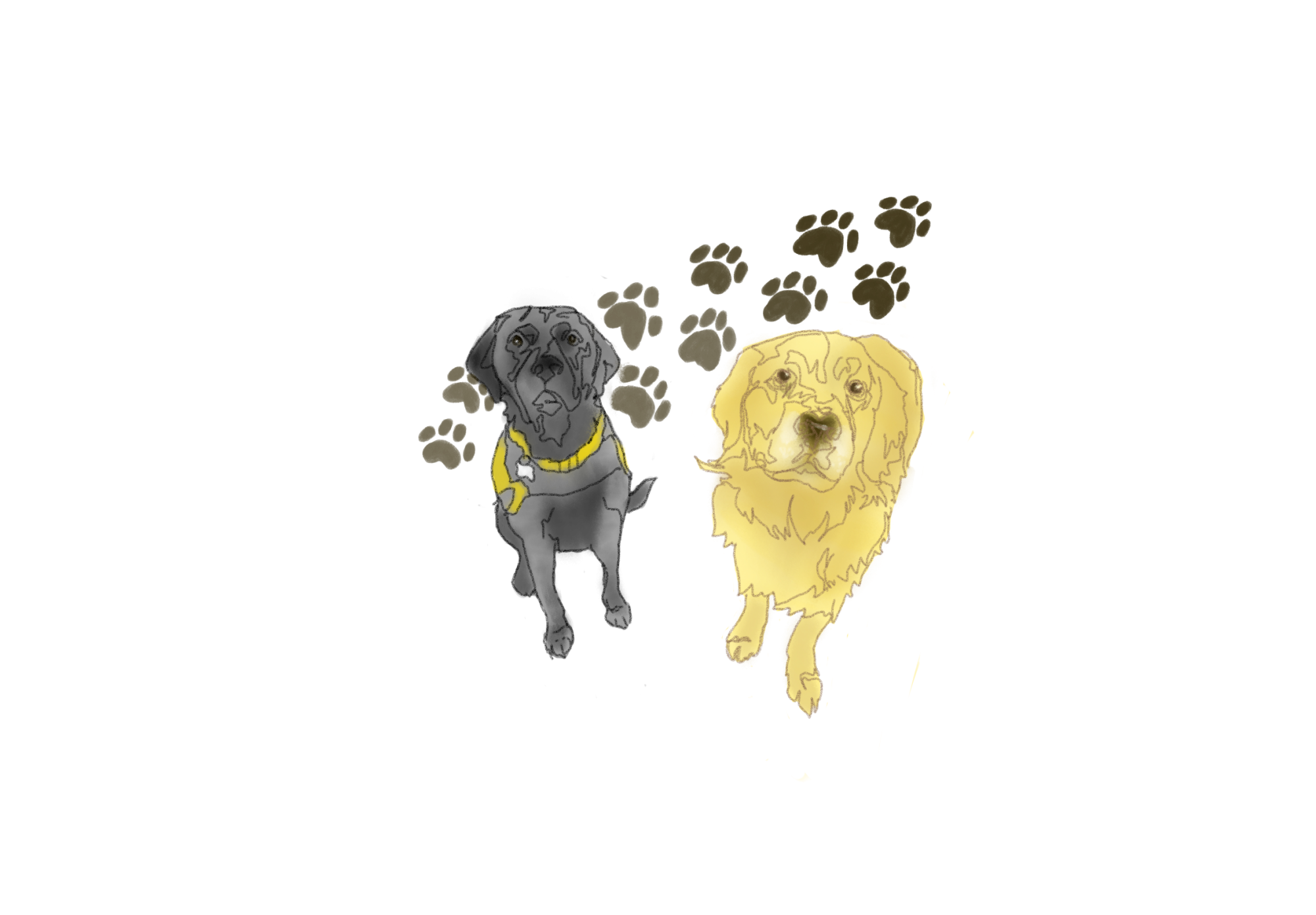

When students need a break from stress they have Ferris to give them comfort. He is more than just a familiar face; he is specially trained to provide comfort and stability to students. Service animals offer crucial support that goes beyond a typical pet relationship, they help people navigate everyday life.
Service dogs take on many specialized jobs tailored to the needs of their handlers, including guiding, therapy and medical alert roles. At UAHS, two types of assistance animals serve the students and staff: a facility dog and a service dog. Intervention specialist, Kim Wilson, and Paraprofessional, Zack Holycross, are the two service dog owners. Ferris, Wilson’s dog, and Scout, Holycross’s dog, have distinctly different roles.
“Service dogs have specific roles and responsibilities for their owners. The owner could experience anything medical, trauma or physical limitations,” Holycross said. “Scout was trained specifically for me.”
“Ferris, on the other hand, is a facility dog. His primary responsibilities are to support all students and staff in the building, calming students, helping those with anxiety and just providing a positive presence,” Wilson said.
The most significant difference is that service dogs are trained specifically for one person, while facility dogs are trained to assist a larger group of people. Whether helping one person or an entire classroom, each dog provides a needed service.
Training a service dog is a lengthy, detailed process that requires patience, structure and a deep understanding of the animal’s abilities. Pilot Dogs, a nonprofit organization in Columbus, provides training and orientation for service dogs. Megan Hammond, a member of the facility dogs team at Pilot Dogs, described the process.
“Our puppy CoPilots raise our dogs until they are between 15 and 18 months, where they are then called back to start formal training,” Hammond said.
Volunteers, called CoPilots, raise the puppies to be confident in typical skills, such as focus, obedience and adaptability, which are skills they need before starting specialized training.
“At this time, we look at things such as how they do in different environments. Some of our dogs stay on the guide dog track, and some go into other careers,” Hammond said.
After the dogs are chosen for specialized training, they undergo behavioral and medical exams. Holycross described the more personalized process he went through with Scout.
“Her training went from basic to intermediate to advanced,” Holycross said. “The intermediate course took six months, while the advanced course took five. Then she was evaluated by a vet, passed and started task work, which took quite a while.”
“Task work” is the specialized program service dogs undergo for specific fields, such as mobility, anxiety or seizure alert. Whether a company trains a dog for a group setting or a dog is more personally trained, each dog’s training focuses on discipline and trust.
Wilson explained that, “The presence of service and facility dogs has a remarkable impact, creating a calmer and more welcoming environment,” Wilson said.
“Ferris’s role is to provide emotional support for everyone,” Wilson said.
“Every single student that we pass says hi to Ferris or smiles at him,” Wilson said.
Wilson noted that even brief interactions with Ferris can lift moods and make the school feel more positive. She also observed that having Ferris in the classroom helped encourage empathy and inclusion and bridged social gaps, especially for students with disabilities. Holycross detailed how having Scout in the building sparked conversations about disability awareness and respect for service animals. Together, Ferris and Scout demonstrate that service and facility dogs do more than perform tasks; they foster connections and community.
Service dogs represent far more than loyal companions. They are trained partners that restore independence, offer comfort and build bridges between people. Whether it’s Ferris brightening the halls of a high school or Scout providing essential emotional and physical support to an individual, each dog plays a unique and meaningful role that exemplifies the power of the human-animal connection.


Sharon Fenstermacher • Feb 1, 2026 at 12:11 pm
Educating people about service animals is important. Thank you for doing so. Google a friend of mine in Bloomington,IN ,Adria Nassim. She is a writer, journalist, speaker, and is autistic. Lucy was her first dog. She allowed Adria to have independence to navigate the community and life. After Lucy retired (she has since “crossed the Rainbow Bridge”) Adria was matched with Mr. T. Adria is adamant that people need to respect the vest of the working service animal.
My cat,Molly, is on my lap. She makes me wonder if a cat can be trained as a service animal.